
AfricaMuseum

Subtitle
Very long subtitle very long subtitle Very long subtitle very long subtitle. Very long subtitle very long subtitle.
Images
Showcase test 4 - afwijkend formaat 1175 - 693.jpg
Description
Description

Test voor introtekst test voor introtekst test voor introtekst nieuwsitem. Test voor introtekst test voor introtekst test voor introtekst nieuwsitem. Test voor introtekst test voor introtekst test voor introtekst nieuwsitem. Test voor introtekst test voor introtekst test voor introtekst nieuwsitem. 

Tussentitel 1

Test voor body van nieuwsitem Test voor body van nieuwsitem Test voor body van nieuwsitem. Test voor body van nieuwsitem Test voor body van nieuwsitem Test voor body van nieuwsitem. Test voor body van nieuwsitem Test voor body van nieuwsitem Test voor body van nieuwsitem. 
Test voor body van nieuwsitem Test voor body van nieuwsitem Test voor body van nieuwsitem. Test voor body van nieuwsitem Test voor body van nieuwsitem Test voor body van nieuwsitem. 
Tussentitel 2

Test voor body van nieuwsitem Test voor body van nieuwsitem Test voor body van nieuwsitem. Test voor body van nieuwsitem Test voor body van nieuwsitem Test voor body van nieuwsitem. Test voor body van nieuwsitem Test voor body van nieuwsitem Test voor body van nieuwsitem. 
Test voor body van nieuwsitem Test voor body van nieuwsitem Test voor body van nieuwsitem. Test voor body van nieuwsitem Test voor body van nieuwsitem Test voor body van nieuwsitem. 

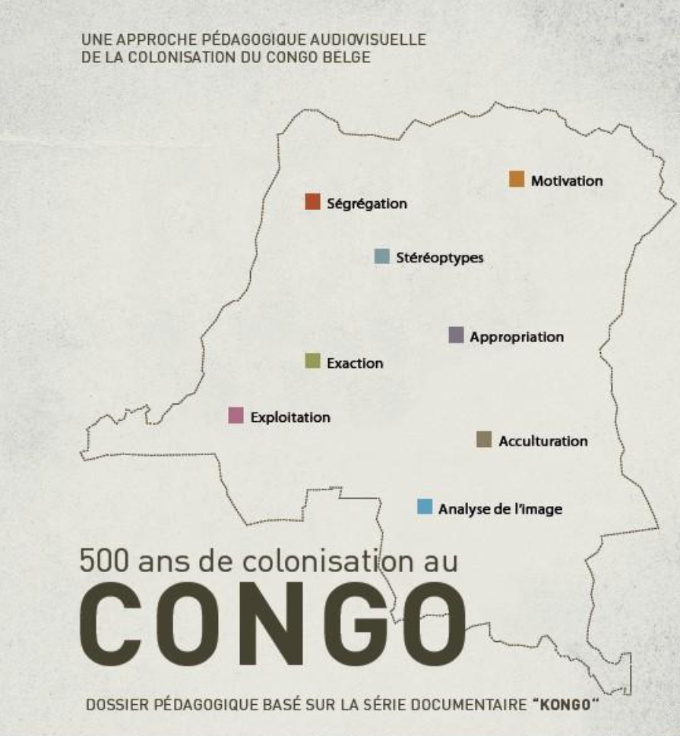
Cover of educational dossier “500 ans de colonisation au Congo”
An educational dossier based on the documentary "Kongo"

What does over 500 years of Western presence in Central Africa and the Democratic Republic of Congo mean? To explore this topic with your students, this educational dossier takes as its starting point the three-part documentary series Kongo. 500 Years of Colonization, 50 Years of Independence in Congo (2010).

Through seven thematic sheets, students navigate history by examining racial segregation, the “cut-off hands” scandal, acculturation, stereotypes, exploitation of people and resources, the motives behind colonization, and land appropriation. These sheets include, among other materials, excerpts from the Kongo series, audiovisual sources, and written documents. Two additional sheets focus specifically on analyzing audiovisual discourse.

All ressources are available online for teachers in the Wallonia-Brussels Federation via the e-classe platform.

Place & period
Precolonial (…-1885)
Congo Free State (1885-1908)
Belgian Congo (1908-1960)
DR Congo (1960-...)
Theme
Governance
Decolonization
Economy
Violence
Independance
Education
Propaganda
Racism
Religion
Type
Lesson package
Documentary
Historical sources
Audio
Video
Year
2020
Language
French
Target audience
1st stage secondary
2nd stage secondary
3rd stage secondary
Duration
N/A
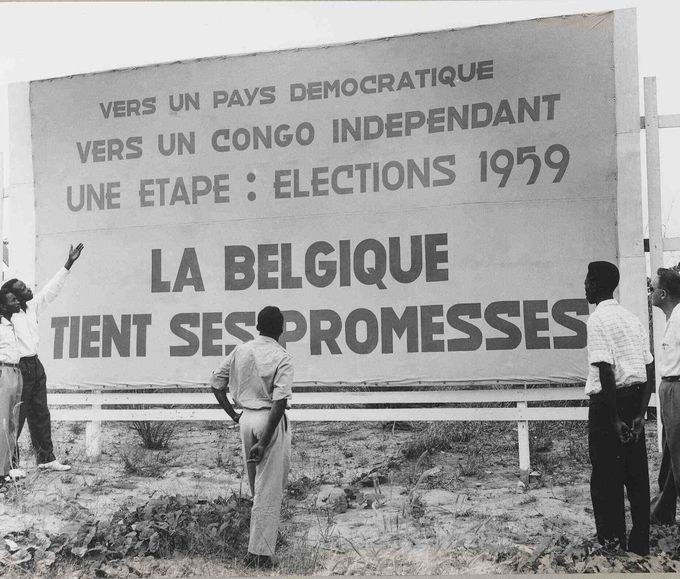
Photo of Congolese men and a colonial official in front of a poster for the provincial elections of December 1959 in the Belgian Congo
Experience independence in 1960 from a Congolese perspective

You want your students to see Congo’s independence through Congolese eyes?  

The online exhibition Indépendance! Congolese Stories is the virtual version of the 2010 physical exhibition at the Royal Museum for Central Africa (RMCA). It is a goldmine for teachers seeking to highlight the perspectives of the colonized population in their classes.

Alongside audio interviews with Congolese people, historical photographs, posters, cartoons, audio clips, and Congolese fabrics bring the past to life. A nice interactive map helps students understand Congo’s independence within the broader context of 20th-century decolonization waves.

Place & period
Belgian Congo (1908-1960)
DR Congo (1960-...)
Theme
Governance
Decolonization
Diaspora
Heritage and memory
Violence
Independance
Propaganda
Racism
Resistance
Type
Historical sources
Expo
Video
Audio
Testimony
Database
Organisation
Year
2020
Language
Dutch
French
English
Target audience
2nd stage secondary
3rd stage secondary
Duration
N/A
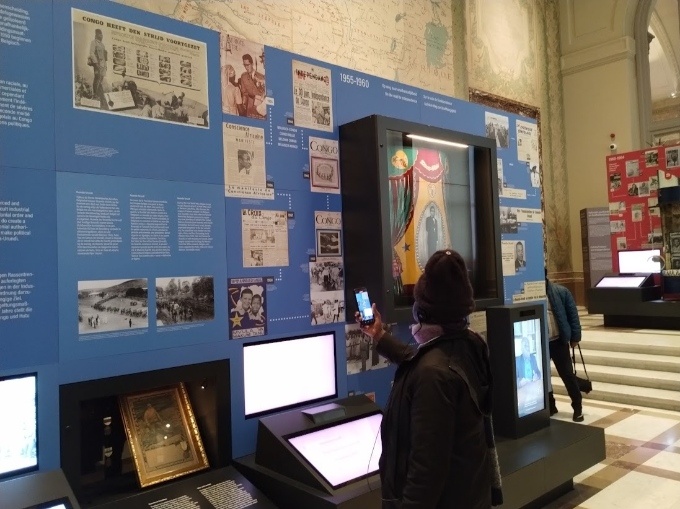
Photo of the history gallery at the Royal Museum for Central Africa in 2024
Student reporters critically cover the colonial past

Tintin in Congo – but with a critical perspective?

In this workshop, students take on the role of video journalists in the galleries of the Royal Museum for Central Africa (RMCA) in Tervuren. Their mission: to produce a video report on Belgium’s colonial history in Congo.

Through Congolese paintings, they explore the perspective of the colonized population. They support their story with texts, objects, and maps discovered in the museum’s history gallery.

Place & period
Precolonial (…-1885)
Congo Free State (1885-1908)
Belgian Congo (1908-1960)
DR Congo (1960-...)
Theme
Governance
Decolonization
Diaspora
Economy
Heritage and memory
Gender
Violence
Independance
Education
Propaganda
Racism
Religion
Resistance
Type
Workshop
Expo
Work of art
Organisation
Language
Dutch
French
Target audience
3rd stage secondary
Duration
150 min.
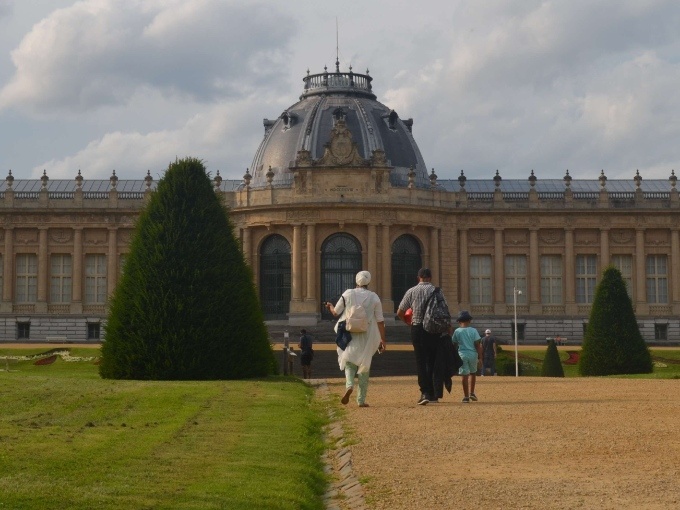
Photo of the Royal Museum for Central Africa in Tervuren in 2021
A museum immersion into the colonial past

Can the past ever be shed? The Royal Museum for Central Africa (RMCA) in Tervuren is a contested space up until present day, carrying the legacy of decades as a colonial propaganda instrument.

Today, the AfricaMuseum aims to offer a critical perspective on its own colonial roots and today's society. During a guided tour, students gain insight into pre-colonial Central African history, colonial violence, local resistance and racism. 

Admission is free for minors!

Place & period
Precolonial (…-1885)
Congo Free State (1885-1908)
Belgian Congo (1908-1960)
Ruanda-Urundi (1919-1962)
DR Congo (1960-...)
Rwanda (1962-…)
Burundi (1962-…)
Theme
Governance
Decolonization
Diaspora
Economy
Heritage and memory
Gender
Violence
Independance
Education
Propaganda
Racism
Religion
Resistance
Type
Guided tour
Expo
Organisation
Language
Dutch
French
Target audience
2nd stage secondary
3rd stage secondary
Duration
90 min.
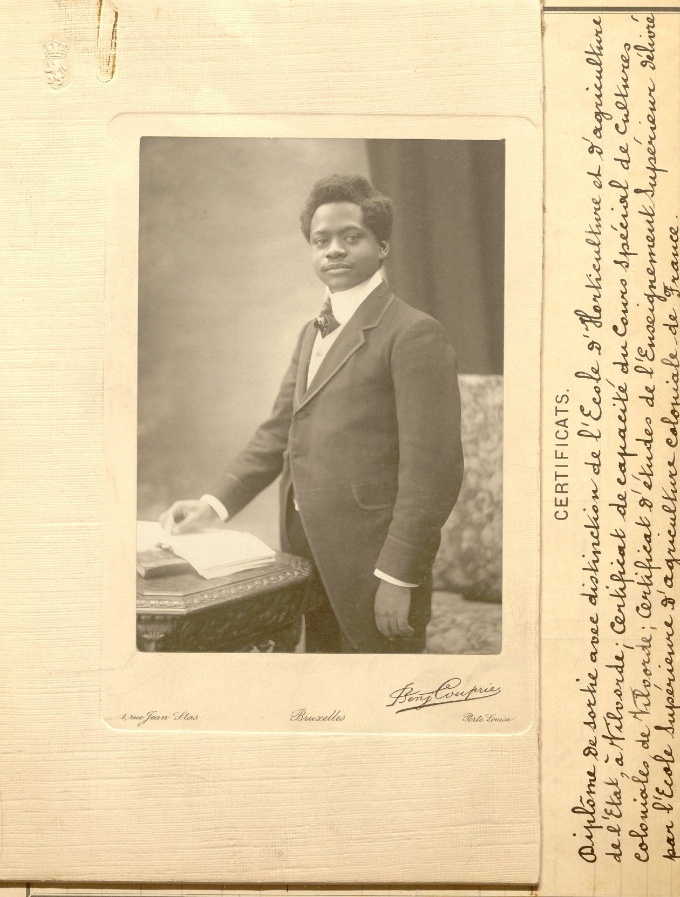
Portrait photograph from the personnel file of Paul Panda Farnana
Worlds Apart? Archival sources provide answers

Contemporary racism has deep roots in the colonial period. But how exactly did racism shape daily life in Congo and Ruanda-Urundi?

In this module, students explore racial segregation through four themes: education, careers, work, and housing. Using digital and interactive tools, they engage with government publications and archival records.

How was colonial society structured along racial lines? Were there exceptions to the rules? And can students draw parallels with the world they know today?

Place & period
Belgian Congo (1908-1960)
Ruanda-Urundi (1919-1962)
Theme
Governance
Diaspora
Economy
Violence
Independance
Education
Racism
Resistance
Type
Lesson package
Historical sources
Audio
Year
2025
Language
Dutch
French
Target audience
3rd stage secondary
Duration
100 min.
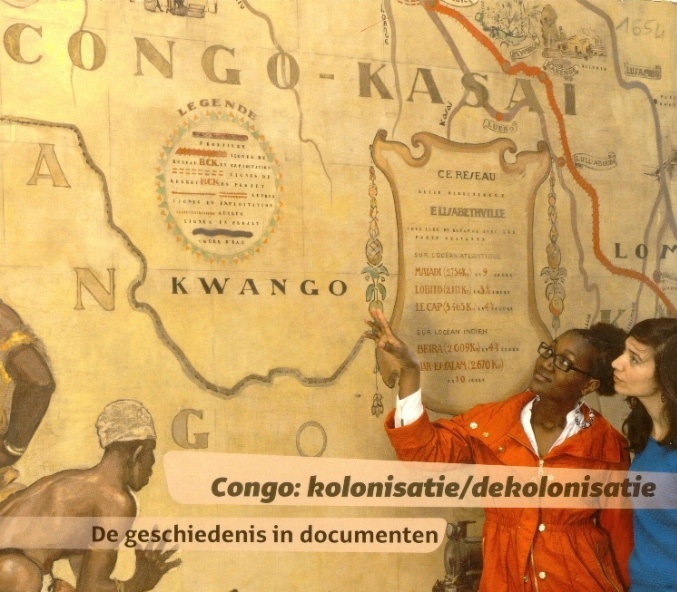
Cover of the book “Congo: Colonization/Decolonization. History in Documents”
Hundreds of historical sources for your classes

The AfricaMuseum’s collection holds thousands of historical records from the colonial period. This book selects hundreds of texts, photographs, maps, videos, audio clips, objects, posters, artworks, and testimonies, specifically tailored for teachers.

A timeline, glossary, and historical context provide insight into the long history of the DR Congo. In addition to focused themes such as resistance, segregation, and representation, the book also takes a multiperspective approach to the colonial past.

All sources are available on a DVD-ROM.

Place & period
Precolonial (…-1885)
Congo Free State (1885-1908)
Belgian Congo (1908-1960)
DR Congo (1960-...)
Theme
Governance
Decolonization
Diaspora
Economy
Heritage and memory
Gender
Violence
Independance
Education
Propaganda
Racism
Religion
Resistance
Type
Book
Historical sources
Video
Audio
Database
Testimony
Work of art
Organisation
Year
2012
Language
French
Dutch
Target audience
1st stage secondary
2nd stage secondary
3rd stage secondary
Duration
N/A